
Visa doesn’t set balance transfer terms — card issuers do. Learn how Visa balance transfer cards work, typical fees, and how to find the best offers.
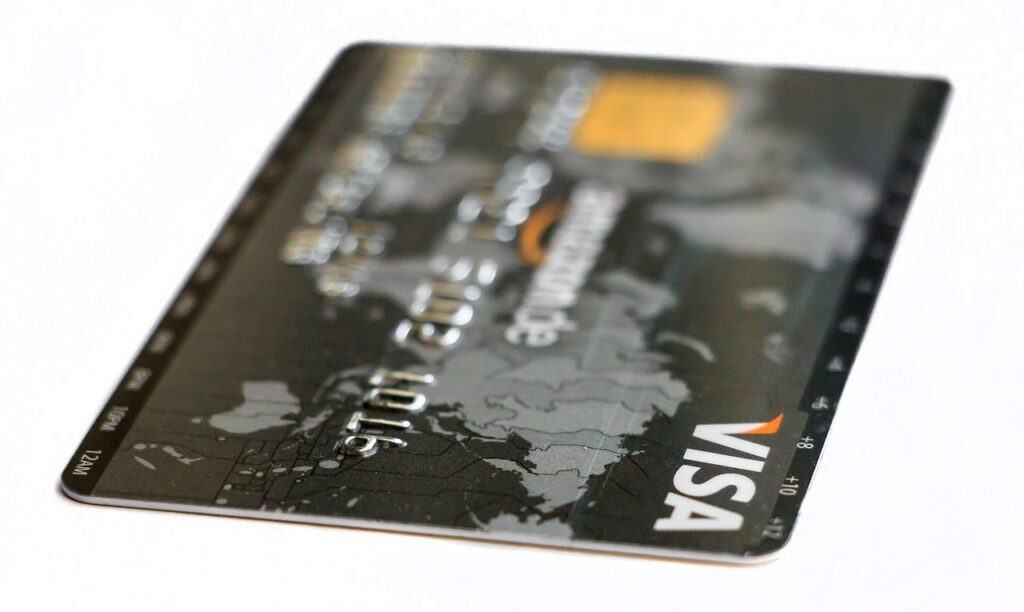
Visa issues some of the top 0% APR balance transfer cards in markets worldwide. As one of the largest payment networks, Visa partners with major banks to provide credit lines letting you shift high-interest card debt onto Visa cards charging 0% temporary intro rates.
The fundamental distinction: Visa does not issue credit cards, set 0% introductory APR periods, or determine transfer fees. Visa is an electronic payments network.
- Who Sets Your Terms: Financial institutions (such as Wells Fargo, Bank of America, Chase, and credit unions) establish promotional APR terms and fees.
- Cross-Network Freedom: You can transfer debt from a Mastercard, Discover, or American Express to a Visa card seamlessly; the only barrier is transferring debt between two cards from the same issuing bank.
- What Actually Matters: Compare the 0% promotional window (12 to 21 months), the transfer fee (3% vs. 5% vs. $0), and the post-promotional regular APR floor.
Search online for “Visa balance transfer cards,” and you’ll find hundreds of consumers asking which Visa offers the lowest rate or the longest promotional period.
It sounds like a logical question. But it’s built on a fundamental misunderstanding of the modern banking system. Clearing up that single distinction will immediately make you a far smarter personal finance consumer.
Visa does not issue credit cards. It does not set balance transfer fees, establish 0% introductory APR durations, approve credit limits, or collect interest. Visa simply operates the worldwide electronic transaction switching network that routes data between merchants and financial institutions. When you search for the best visa balance transfer cards, what you are actually searching for are the best promotional offers from financial institutions that happen to license the Visa payment network insignia.
That distinction is critical: you must compare issuing bank terms, not payment network logos.
Visa vs. Mastercard vs. American Express: Does the network matter for balance transfers?
Almost never. The logo in the bottom corner of your plastic card governs merchant acceptance and ancillary perks (like secondary auto rental collision damage waivers or Visa Signature concierge access). It has virtually zero impact on your balance transfer:
- The network logo does not dictate whether you receive 15 months or 21 months of 0% APR.
- The network logo does not determine whether your transfer fee is 3% or 5%.
- The network logo does not establish your post-promotional ongoing interest rate.
If Bank of America offers a 0% APR balance transfer deal on both a Visa and a Mastercard product, the financial terms on both cards are mathematically identical. Pick your card based on the issuing bank’s underwriting contract, not whether it prints a Visa or Mastercard hologram.
The one network structure worth understanding: While Visa and Mastercard operate exclusively as payment transaction networks, American Express and Discover historically operated as both network and issuing bank. This is why you cannot transfer debt from one American Express card to another American Express card: the restriction isn’t about the network, but the underlying same-issuer barrier.
5 critical factors to evaluate on any Visa balance transfer offer
Because the Visa network itself is neutral, focus your comparison strictly on these five issuing bank terms:
- The 0% Introductory APR Horizon: This is the most most important number on the page. On an $8,000 balance, a 21-month promotional window demands a manageable monthly payment of $381. A 12-month card requires $667 monthly to finish on time. Longer runways provide breathing room against unexpected household budget shocks.
- The Balance Transfer Fee Structure: Typically 3% to 5% with a $5 to $10 minimum. On a $10,000 balance, paying 3% costs $300, while a 5% fee costs $500. A select group of federal credit unions offer verified $0 balance transfer fee Visa cards, as detailed in our No Balance Transfer Fee Cards Guide.
- The Regular Variable APR Floor: What happens if life derails your timeline and you have an unpaid balance at month 22? According to the Federal Reserve [Source: Federal Reserve G.19 Report], commercial card rates average 24.37%. A card jumping to 19% ongoing APR is far safer than one jumping to 29.99%.
- The Transfer Request Window: Many banks require balance transfer requests to be submitted within the first 60 to 90 days of account opening to qualify for the 0% promotional APR or the discounted 3% fee tier. Miss that deadline, and your transfer converts to standard variable rates.
- Same-Issuer Transfer Restrictions: You cannot transfer balances between two credit cards issued by the same banking institution. If you owe $7,000 on a Chase Freedom Visa, you cannot transfer that balance to a Chase Slate Edge Visa. Your new card must be issued by a different bank (such as Citi, Wells Fargo, or a credit union).
Leading financial institutions issuing Visa balance transfer cards
Rather than relying on outdated static reviews, look at how the major Visa-issuing institutions structure their promotional products:
| Issuing Institution | Promotional Archetype | Standard Fee | Best Suited For |
|---|---|---|---|
| Wells Fargo | Up to 21 Months 0% intro APR | 5% (min $5) | Maximum payoff timeline on large debts |
| Bank of America | 15 to 18 Months 0% intro APR | 3% for first 60 days | Existing preferred banking relationships |
| U.S. Bank | 18 to 21 Months 0% intro APR | 3% to 5% | Long runways with competitive regular APRs |
| Federal Credit Unions | 12 Months 0% (or low ongoing rate) | $0 Transfer Fee | Zero fees and NCUA 18% statutory APR cap |
To compare live interest rates, fee tiers, and promotional windows side by side, visit our 33 Best Balance Transfer Credit Cards Comparison Page.
How to execute a balance transfer on a Visa card correctly
The operational process for moving debt onto a Visa card is identical across all major financial institutions:
- Apply and confirm your approved credit limit: Card issuers do not allow transfers that exceed your assigned credit limit (and most cap total transfers at 75% to 90% of your total credit line to allow room for the transfer fee).
- Initiate the transfer request: Log into your new card portal or call the number on the card. Supply your current card’s 16-digit account number and the exact payoff dollar amount.
- Maintain minimum payments on your old card: Balance transfers take 3 to 7 business days to clear. If an automated due date falls during that gap, make the minimum payment to avoid late-payment credit marks [Source: CFPB Credit Reporting Guidelines].
- Confirm the balance clears, then automate repayment: Verify your old account reads $0. Then set up automated recurring payments on your new Visa card equal to your total balance divided by the number of promotional months remaining.
You can model your exact payoff numbers with our free Credit Card Payoff & Amortization Calculator Suite.
Frequently Asked Questions About Visa Balance Transfer Cards
Does Visa directly charge a balance transfer fee?
No. Visa is a payment processing network, not a lender. All balance transfer fees (typically 3% to 5%) and interest rates are determined exclusively by the issuing bank that created your credit account.
Can I transfer a balance from a Mastercard or American Express to a Visa?
Yes. Payment network logos do not restrict transfers. You can move debt from a Mastercard, Amex, or Discover over to a Visa card smoothly. The only universal restriction is that you cannot transfer balances between two accounts at the same issuing bank.
Are Visa Signature or Visa Infinite cards better for balance transfers?
No. Visa Traditional, Signature, and Infinite designate premium cardholder perks (such as travel insurance or concierge services). They have zero impact on your balance transfer promotional APR or transfer fee.
What credit score is needed to qualify for a 0% APR Visa card?
Most major issuers require a good to excellent FICO score (670 to 720+) for promotional 0% balance transfer cards. If your credit score is currently in the fair range (580 to 660), explore options in our Fair & Bad Credit Balance Transfer Guide.